EXHIBITS ENTERED INTO EVIDENCE
These exhibits are presented as linked records for the jury (the reader). Click any exhibit to expand the full record. Exhibit A is foundational and may be referenced throughout.
A
Foundational
Exhibit A — Aligned Numbers/Dates People and Events
After the Sandy Hook tragedy, the plaintiff/author discovered the founding dates for the prophetic lottery numbers reoccurred throughout American history and culture in unusual and profound ways. The foundational reference index for all date alignments in the record.
Expand Exhibit →
Exhibit
Expand Exhibit →
Aligned Date/Number Exhibit
Primary & secondary references entered as an index of aligned facts referenced throughout the record.
Primary & Secondary References
Primary Dates:
- September 8 (9/8)
- December 14 (12/14)
Secondary Reference Dates / Numbers:
- December 20 (12/20)
- 8, 9, 12, 14, 20
- 9 × 8 = 72
Limiting Instruction
- This exhibit is offered solely as an index of date-aligned facts referenced in witness testimony throughout the proceedings.
- All alignments are presented as attention markers, not causes, predictions, or explanations of tragedy.
- No meaning is assigned to loss, and no claim of inevitability or divine causation is made.
- This exhibit functions as a navigational appendix for the jury.
Spock's limiting instruction (admissibility)
The court admits this context for a narrow purpose: it explains why the witness noticed and preserved certain dates and numbers, and how they function in the narrative as organizing markers. It is not admitted to prove causation, prophecy, or inevitability. The jury may consider it only as background for credibility, chronology, and the witness's state of mind.
Foundational Testimony — The Plaintiff
Encounters with the Story of Jesus
Power, Authority & Moral Choice
- King Richard I — September 8, 1157 — born
- King George III — September 8, 1761 — met and married Princess Charlotte
- Queen Victoria — December 14, 1861 — death of Prince Albert; December 14, 1878 — death of Princess Alice
- King George VI — December 14, 1895 — born
- Queen Elizabeth II — September 8, 2015 — surpassed Victoria's reign; September 8, 2022 — died
- George Washington — December 14, 1799 — died
- Richard Nixon — September 8, 1974 — presidential pardon
- Evel Knievel — September 8, 1974 — Snake River Canyon jump
- Donald J. Trump — December 14, 2020 — first COVID vaccine administered; Electoral College certification
Civil War — Power, Division & Moral Reckoning
- Civil War began April 12, 1861; ended April 9, 1865
- Abraham Lincoln — shot April 14, 1865 (Good Friday); assassin captured 12 days later; 8 individuals executed or imprisoned
- Joshua Lawrence Chamberlain — September 8 — birth; hero at Gettysburg leading the 20th Maine
Catastrophe & Technology Idolatry
- Galveston Hurricane — September 8, 1900 — deadliest natural disaster in American history
- Titanic — struck iceberg 20 minutes before midnight on April 14, 1912; only 20 lifeboats; designed in 1908; film won Best Picture at 1998 Academy Awards
Redemption out of War
- JFK / Cuban Missile Crisis — September 8, 1962 — first Soviet missiles delivered to Cuba
- Wernher von Braun — September 8, 1944 — first V-2 missile used against civilians
- Apollo Program — December 14, 1972 — final crewed lunar mission departed the Moon; 12 men walked on the Moon; Apollo 8 Christmas Eve broadcast
Music as Cultural Memory & Redemption
- Ken Burns / Country Music — September 8 — birthdates of Jimmie Rodgers and Patsy Cline; Ken Burns Country Music concert special aired September 8, 2019
- John Lennon — born October 9; obsession with 9; December 8, 1980 — death, the 72 bus, the 72 address, 9 × 8 = 72
- Pink (Alecia Moore) — September 8, 1979 — birth
- Taylor Swift — born December 13, 1989; Grammy winning album Midnights; wrote first song at age 12, moved to Nashville at age 14; turned 23 on 12/13/2012 — the day before Sandy Hook
Sports as Communal Memory & Redemption
- 1972 Summit Series (Canada vs. USSR) — 9 × 8 = 72; on September 8, 1972, USSR led. Canada won in final seconds of Game 8.
- Michael Jordan — "The Shot" (1989 & 1998); three-peat wins on June 12, 14, 20
- Chicago Cubs — Sosa/McGwire HR record on September 8, 1998; last championship in 1908 (108 years prior); Bartman scapegoating in 8th inning, 8 runs, SS#8 key error; 2016 redemption
- 1972 Dolphins — perfect season; Bears Super Bowl 20; #72 "Refrigerator" Perry
- Muhammad Ali — 8th-round KO of George Foreman ("rope-a-dope")
- Wilma Rudolph — Olympic gold on September 8, 1960
- Tim Tebow Football — Broncos 2011–12 ended 8–8; playoff "3:16 game"
- Tim Tebow Baseball — contract signed September 8, 2016
- First "Hail Mary" — Staubach #12 to Pearson #88
- Knute Rockne / George Gipp — "Win one for the Gipper"; Gipp died December 14, 1920
Closing Human Witnesses
Jesse left the message "NURTURIN HELIN LOVE" on a chalkboard before he died; it inspired the Choose Love Movement. Love → Tragedy → Love mirrors The Great Invitation and the Passion story of Jesus.
Emilie Alice Parker — age six, artist, dressed in pink — died at Sandy Hook. Her mother Alissa documented signs of Emilie's continued presence and built a foundation around what Emilie loved most: art, color, and making people happy. Beauty → Tragedy → Beauty mirrors The Great Invitation and the resurrection story of Jesus.
Numeric Relationship Note
The numbers 8–9–12–14–20 were first preserved as personal markers of love and chronology, not prediction. Later, 72 (as 9 × 8) emerged as a bridge-number linking this private framework to broader cultural and historical patterns without claiming causation.
Common symbolic meanings (non-binding)
- 8 — new beginnings / renewal
- 9 — fullness / completion
- 12 — governance / covenant community
- 14 — deliverance / Davidic framing
- 20 — accounting / judgment / maturity
- 72 — bridge-number across multiple traditions
Jury Notes
- This exhibit is a reference index, not an argument.
- Skepticism is preserved and encouraged.
- No additions permitted without formal amendment.
B
Exhibit
Exhibit B — Prophetic Lottery Numbers
The first time the sacred numbers were played in 2009 and the day they became tragically prophetic in 2012. This is the sacred waiting period.
Expand Exhibit →
Exhibit
Expand Exhibit →
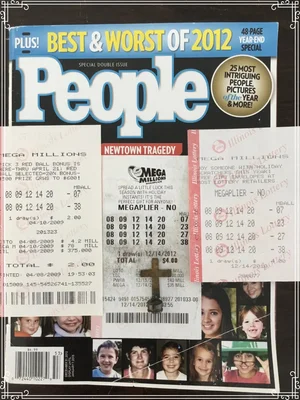
The Lottery Tickets and the Sacred Waiting Period
Statement of Facts
Purchased for the drawing on the author's 10th Wedding Anniversary that was on April 10, 2009 — ONLY BECAUSE it fell on Good Friday. If it had fallen on any other day, no ticket would have been purchased. The author never played the lottery.
The numbers were chosen because of three significant dates that honor the Wedding Anniversary:
- 9-8 — His brother David's birthday and his sister-in-law Mary's birthday. David and Mary also happen to be biblical names.
- 12-14 — The author and his wife Rebecca's first date. They met through Match.com.
- 12-20 — Their second date: the blockbuster film Titanic on 12/20/1997.
Second time the sacred numbers were played on 12/14/2010 because of the miraculous events around his sister's wedding on November 20, 2010.
The sacred numbers tragically became prophetic on 12/14/2012.
Waiting Period
Conclusion
He has risen! Believers will receive their allotted inheritance.
C
Exhibit
Exhibit C — E-mail proving it wasn't about money
The e-mail sent from the author to his mother on his birthday April 6, 2009 — four days before the lottery drawing on Good Friday, his 10th wedding anniversary. Documents intent to give the money away.
Expand Exhibit →
Exhibit
Expand Exhibit →
Email — Subject: Miracle
Email Text
D
Exhibit
Exhibit D — Answer Me (Magic 8-ball) Jesus Toy
Displayed by plaintiff/author's co-worker at work. It's what prompted the lottery ticket purchase on Good Friday 2009 and introduced the project's earliest moral directive: Love one another.
Expand Exhibit →
Exhibit
Expand Exhibit →
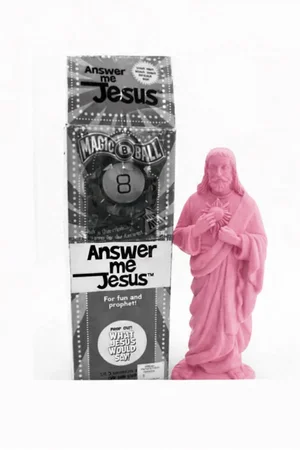
Answer Me Jesus "Magic 8-Ball" Toy
Statement of Facts
This "toy" in a co-worker's cube kicked off The Great Invitation. It works like the 8-ball toy — turn it upside down and it gives random answers in a mystical little window. A particular question and answer gave the author the idea to play the lottery on his 10th Wedding Anniversary (April 10, 2009) — which was also Good Friday.
The response is submitted as the initiating "interruption" that framed the author's next actions and introduced the project's earliest moral directive.
E
Exhibit
Exhibit E — Hanukkah and the Temple Numbers
The Festival of Lights encodes the foundational numbers 8 and 9 in its duration, its ritual object, and its servant candle. The same Temple at the center of this miracle is the Temple destroyed on September 8, 70 AD — already in this record.
Expand Exhibit →
Exhibit
Expand Exhibit →
Hanukkah and the Temple Numbers
I. Statement of Relevance
The numbers 8 and 9 — central to the aligned number framework — appear structurally in the Jewish festival of Hanukkah. The same Temple whose miraculous rededication Hanukkah commemorates is the Temple whose destruction on September 8, 70 AD is already in this record. The numbers were in the Temple before the framework was built around them.
II. Factual Background
In 165 BC, the Maccabees recaptured the Second Temple after it had been desecrated by Antiochus IV. The Maccabees found only enough consecrated oil for one day. According to the Talmud, the oil burned for eight days — long enough to properly rededicate the Temple. Hanukkah, the Festival of Lights, commemorates this miracle.
Hanukkah is celebrated for eight days and eight nights. The number 8 in the aligned number framework represents Jesus, resurrection, and new beginnings. Eight days of light that refused to go out carries natural resonance with themes of divine faithfulness and renewal.
The Hanukkiah has nine branches. Eight represent the eight days of the miracle. The ninth — the shamash, meaning servant or helper — is the candle used to light all the others. It stands apart from and above the eight. The number 9 represents judgment and finality.
The shamash gives light to all others without diminishing its own flame. It is set apart and elevated, yet its entire purpose is to serve. This reflects the suffering servant of Isaiah 53: the one through whom all others receive light, whose giving does not deplete but multiplies.
The Second Temple rededicated at Hanukkah in 165 BC was ultimately destroyed by Rome in 70 AD. This court has already entered the date of that destruction — September 8, 70 AD — into the record.
III. Findings of Record
IV. Adversarial Qualification
Hanukkah predates Jesus by approximately two centuries. There is no direct New Testament connection. The eight days and nine branches were determined by the tradition itself — not by any intention to align with a later framework. These alignments are offered as pattern observations only.
V. Conclusion
The framework did not find these numbers in Hanukkah. Hanukkah had them first.
Submitted for the record as evidence that the aligned number framework appears in the oldest continuous Jewish celebration connected to the Second Temple — predating the framework's discovery by more than two thousand years.
F
Exhibit
Exhibit F — Angelic Narration — Hidden Exhibit: Marymas
On the eighth day of September, a child is born who changes nothing — and therefore makes everything possible. This is Marymas: not a miracle of power, but of readiness.
Expand Exhibit →
Exhibit
Expand Exhibit →
Marymas and the Mercy-Through-Time Doctrine
I. Statement of Relevance
This exhibit demonstrates that mercy is not an ad hoc exception to justice, but a coherent, traceable principle embedded within salvation history. The record will show that mercy appears first as preparation, then as tolerated precedent, and finally as embodied resolution.
II. Factual Background
Marymas commemorates the birth of Mary, the mother of Jesus. The feast is ancient, originating in Eastern Christianity by the 6th century and adopted in the Western Church by the late 7th century. The date is fixed, symbolic, and precedes all public acts associated with Jesus of Nazareth.
David, second king of Israel, is the foundational figure of the Davidic covenant. The historical and scriptural record documents both his anointing and his grave moral failures, including acts that would ordinarily disqualify him under Mosaic law.
Jesus of Nazareth is identified within Christian theology as the Messiah and is repeatedly designated "Son of David," explicitly tying his mission to the Davidic line and covenant.
III. Findings of Record
Mary's birth involves no violation of law, no suspension of justice, and no supernatural intervention at the moment itself. Its relevance lies in capacity rather than action. Redemption begins not with force or judgment, but with the quiet preparation of consent.
David commits acts that, under the law, warrant severe penalty. Nevertheless he is confronted, not erased. Consequences are imposed, but covenantal promises remain intact. His lineage is not revoked.
What is prepared in Mary and preserved through David is ultimately embodied in Jesus. Mercy does not bypass justice; it absorbs its cost. Law and grace are no longer in tension but are reconciled through self-giving.
IV. Legal and Theological Implications
- Mercy is not arbitrary.
- Mercy does not deny guilt or consequence.
- Mercy demonstrates continuity across time, lineage, and covenant.
The progression is internally consistent: Marymas establishes intent. David establishes precedent. Jesus establishes fulfillment.
V. Conclusion
The exhibit demonstrates that mercy is not a contradiction of justice but its deeper completion. The record supports a coherent throughline in which love refuses to allow failure to terminate history.
Submitted for the record as evidence that redemption operates by invitation, not coercion.
G
Exhibit
Exhibit G — Historical Interruption of Violence
Christmas Truce of World War I (1914): soldiers on the Western Front spontaneously ceased fighting to observe Christmas — a documented example of moral choice overriding despair and dehumanization, even briefly.
Expand Exhibit →
Exhibit
Expand Exhibit →
Historical Interruption of Violence
Limiting Instruction
This exhibit is admitted solely as historical context. It is not offered as evidence of numerical alignment, prophecy, causation, or inevitability. No meaning is assigned to war, loss, or suffering.
Statement of Facts
By December 1914, World War I had entered a stalemated phase along the Western Front. Soldiers from opposing nations occupied entrenched positions separated by no man's land. Conditions were severe, casualties were high, and morale was deteriorating on all sides.
On the evening of December 24, 1914, in multiple uncoordinated locations along the front, German soldiers began placing candles on trench parapets and singing Christmas carols, including Stille Nacht ("Silent Night"). British troops recognized the song and responded with carols of their own. Verbal exchanges followed. Soldiers exited their trenches without weapons and met in no man's land.
- Exchange of small personal items, including food, cigarettes, buttons, and photographs
- Joint burial of the dead and informal funeral observances
- Temporary suspension of hostilities
- In some locations, informal football matches
These ceasefires were not ordered or authorized by military command. Senior officers on both sides later issued explicit orders prohibiting any recurrence. Hostilities resumed shortly thereafter.
Historical Consensus
The Christmas Truce did not end the war. It was not coordinated, negotiated, or enforced. What distinguishes the event is its spontaneity and its origin at the level of individual human choice — without command approval.
Relevance to the Proceeding
This exhibit supports the broader inquiry of the court: whether human attention, recognition, and shared meaning can interrupt cycles of violence or despair — even temporarily — without coercion or force.
The Christmas Truce is offered as a comparative historical example of interruption through recognition, not as proof, pattern, or prediction.
Jury Note
Instruction: This exhibit should be read as contextual background only. It does not assert recurrence, symbolism, or alignment with other evidence unless explicitly stated elsewhere in the record.
H
Exhibit
Exhibit H — Signs and Wonders Before the Destruction
Before Jerusalem fell on September 8, 70 AD, Josephus recorded signs in the Temple — a great light on the eighth day of the month, at the ninth hour of the night. Eight and nine. In Josephus's own words. Before the framework existed to notice them.
Expand Exhibit →
Exhibit
Expand Exhibit →
Signs and Wonders Before the Destruction
I. The Primary Source
The following passage is drawn directly from Flavius Josephus, The Wars of the Jews, Book VI, Chapter 5, Section 3. Josephus wrote this account to document the events surrounding the destruction of Jerusalem — not to validate any number framework, not to fulfill prophecy, and not to align with any later theological or numerical system. He recorded what he found in his sources.
II. The Numbers in the Text
Josephus records two specific numbers in describing the sign that appeared in the Temple:
of the month
of the night
These are not symbolic assertions made by this proceeding. They are the numbers Josephus recorded — drawn from his sources, preserved in his account, and present in the text nearly two thousand years before this framework was constructed.
III. The Number Framework Connection
In the aligned number framework, 8 represents Jesus, resurrection, and new beginnings. The eighth day of the sign aligns with this. The eighth day also carries independent significance: Jesus was named on the eighth day after his birth, and 8 in biblical numerology represents the one who stands outside ordinary time.
In the aligned number framework, 9 represents judgment and finality. The ninth hour is the hour Jesus died on the cross — already established in this proceeding as the basis for 9 representing judgment. It is also the hour at which the sign appeared in the Temple, according to Josephus.
Josephus records a star resembling a sword standing over the city for a whole year. In Revelation 19 — the passage the framework identifies as the return of Jesus — Christ appears bearing a sword. The sword coming from his mouth is identified in the framework as the story of his passion. A sword-shaped star over Jerusalem, recorded by Josephus as a portent of destruction, echoes the symbolic language of the very passage the framework centers on.
A great light shone around the altar and the holy house — appearing as bright daylight for half an hour at the ninth hour of the night, on the eighth day of the month. The sacred scribes interpreted it as a portent of destruction. The unskilful regarded it as a good sign. Both were partly right: what followed was destruction and, for those who received it, the beginning of something new. Darkness and light. Judgment and new beginnings. Nine and eight. In the Temple. Before the end.
IV. Adversarial Qualification
Josephus recorded these signs as part of a well-established rhetorical tradition of prodigies common in ancient historical writing. He did not necessarily witness them himself. The eighth day and ninth hour are incidental details recorded without any intention to align with a later number framework. These alignments are offered as pattern observations only.
V. The Sequence
The numbers 8 and 9 appear in this proceeding's record in the following sequence:
- In the Hanukkah miracle — 8 days of miraculous light; 9 branches on the Hanukkiah — 165 BC
- In the signs before the destruction — the eighth day of the month, at the ninth hour of the night — recorded by Josephus before 70 AD
- In the fall of Jerusalem — September 8 (9/8), 70 AD — the date already in this record
- In the framework itself — discovered through personal dates in 2009, validated on December 14, 2012
The numbers were in the Temple at its rededication. They were in the Temple at the sign before its destruction. They were in the date of its destruction. The framework did not place them there.
VI. Conclusion
Josephus recorded what he found. The numbers were already there — on the eighth day, at the ninth hour, in the Temple, before the city fell on September 8, 70 AD.
The sacred scribes who witnessed the light interpreted it as a portent. The framework asks a similar question two thousand years later: is this the kind of thing that happens by accident?
Submitted for the record as evidence that the aligned number framework appears in Josephus's own account of the signs preceding the destruction of Jerusalem — in the Temple, at the intersection of the eighth day and the ninth hour, before the city fell on the date already in this record.
Coincidence vs Structure
The claim is not causation. The question is whether the pattern shows disciplined, stable coherence that resists dismissal as chance.
Coincidence
What "random + searching" often produces:
- Matches appear mainly after outcomes are known
- Rules shift to preserve the hit
- Scope expands until something fits
- Many exceptions; few constraints
- A collage of hits, not a system
Structure
What "constraint-like coherence" looks like:
- Numbers are anchored in independent facts (dates, artifacts, records)
- Rules remain stable across cases
- Scope is defined in advance (where you will look / won't look)
- Coherence persists across independent domains
- Fewer arbitrary choices explain more ("compression")
Replication Test (Disciplined Challenge)
- Start with your life: choose five numbers anchored in significant personal dates (births, marriages, losses, events). Test against an established symbolic framework without forcing fit.
- Reverse direction: start with symbolic numbers, then pick five numbers anchored in significant personal dates (births, marriages, losses, events).
- Apply external scope: test within a defined public domain (here: American history) without expanding rules when you miss. Are you including highly significant events and people?
- Core-figure check: test whether the same set coherently aligns with the story of the symbolic framework/tradition's central figure. Are the principles, ethics and values of your chosen tradition reflected in these connections?